
If you read the previous post and recognised yourself in some of the signs of shock, you may be wondering what happens next. You may even be thinking, "Okay, I understand that I might be living in survival mode, but what does that actually mean for my life?" This is where things start becoming clearer, because shock rarely stays contained to one area. It has a habit of quietly spreading into everything. Your thoughts, emotions, confidence, relationships, sleep, health and even your sense of who you are can all begin changing without you fully realising it.
One of the reasons shock is so difficult to recognise is because the changes happen gradually. Most people do not wake up one morning and suddenly become anxious, disconnected, irritable or exhausted. Instead, these changes creep in over time until eventually they begin feeling normal. A client once said to me, "I don't know what's happened to me. I used to be confident and capable but now everything feels harder." She was not lazy, weak or broken. Her nervous system had simply spent so long preparing for danger that it had very little energy left for anything else.
Many people notice the changes first in their thinking, overthinking situations that never used to bother them. Conversations get replayed on a loop and decisions become harder to make. Small problems start feeling much bigger than they really are, and the mind becomes focused on predicting what might go wrong instead of enjoying what is going right.
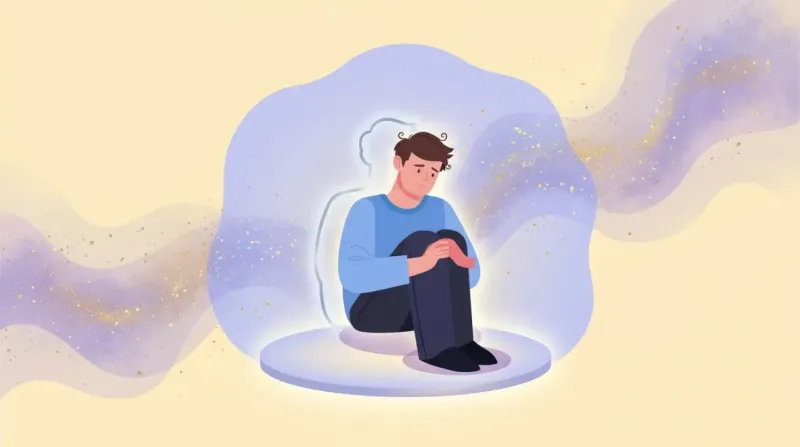
Others notice changes in their emotions. They become more reactive, more impatient or more easily overwhelmed. Things that once washed over them now seem to stay for days. Sometimes they become emotional over things that would never have affected them before, and afterwards they feel confused by their own reactions, like a stranger in their own body and mind.
For other people, the opposite happens. Instead of feeling too much, they stop feeling very much at all. They tell me they do not feel sad, but they do not feel happy either. They simply do not feel much of anything. A client came to see me because she was getting married. She genuinely loved her fiance but could not find the excitement she felt she should have had.
This emotional numbness can be frightening because people often believe they have lost part of themselves. In reality, the nervous system is trying to protect them from overwhelm. Unfortunately, when it turns the volume down on difficult feelings, it tends to turn the volume down on joy, excitement and connection too.
How does shock affect relationships?
Shock affects our relationships in ways we rarely connect back to it. When we are living in protection mode, connection becomes harder. We become more defensive, more withdrawn or more sensitive to the actions of others, and may even push people away without being consciously aware of it. Small disagreements can feel much bigger than they are because survival is always scanning for signs of threat. Many couples spend years arguing about the symptoms without ever recognising the cause. One person feels criticised, the other feels unheard, and both nervous systems become focused on protection rather than connection.
We also begin seeing our loved ones differently when in survival mode. Qualities that once seemed attractive in a partner can start to feel irritating or unsafe. A spontaneous partner may suddenly seem reckless. A relaxed partner may appear irresponsible. Someone who enjoys taking opportunities may begin to look careless, whilst a quieter partner may seem distant or uninterested.
This can create real confusion, because the partner may not have changed very much at all. What has changed is the state from which they are being viewed. When survival becomes the lens, safety often becomes more important than love, connection, fun or adventure, and this can slowly create distance between two people who genuinely care about one another. In many relationships, it is not the person that has changed. It is the nervous system's interpretation of them.
How does shock affect sleep?
Sleep is another area that commonly changes. Some people struggle to fall asleep because their nervous system is still running too fast, whilst others wake during the night and find their minds immediately begin racing. The body may be lying in bed, but the nervous system is still on duty, scanning, thinking and trying to stay one step ahead of problems that have not happened yet. The brain at 3am is not as well equipped to process problems as it is during the day, which can make everything feel far worse than it is.
How does shock affect the body?
The body is affected too. As the nervous system remains on high alert, muscles tighten, digestion changes, energy drops and physical pain becomes more noticeable. Many people spend years trying to fix each symptom individually, never realising that a nervous system stuck in survival mode may be sitting underneath them all.
So how is shock really affecting my life?
Perhaps the greatest cost of shock is not that it takes away our abilities, our intelligence or our potential. It takes away our access to them. Creativity becomes harder to reach. Confidence becomes harder to feel. Things that once came naturally now feel like wading through treacle, and joy becomes harder to experience. The qualities are still there, but survival has temporarily taken priority. Like all the sweets are in the shop, but you are standing outside looking in through a misted window.
The nervous system will always choose safety before growth, protection before creativity, and survival before joy. That is why so many people eventually find themselves saying, "I don't feel like me anymore."
The good news is that understanding what shock has been costing you is the beginning of changing it. Once you can see the pattern, you can begin creating a pathway out of it. In the next post, we will explore how to help the nervous system feel safe again, because before confidence, motivation, happiness and connection can fully return, the body first needs to believe that the danger has passed.
That is why I created HappyMe. Tasks, lessons, exercises, questionnaires and much more are available to help you create that pathway for yourself, out of survival and back into thriving.