
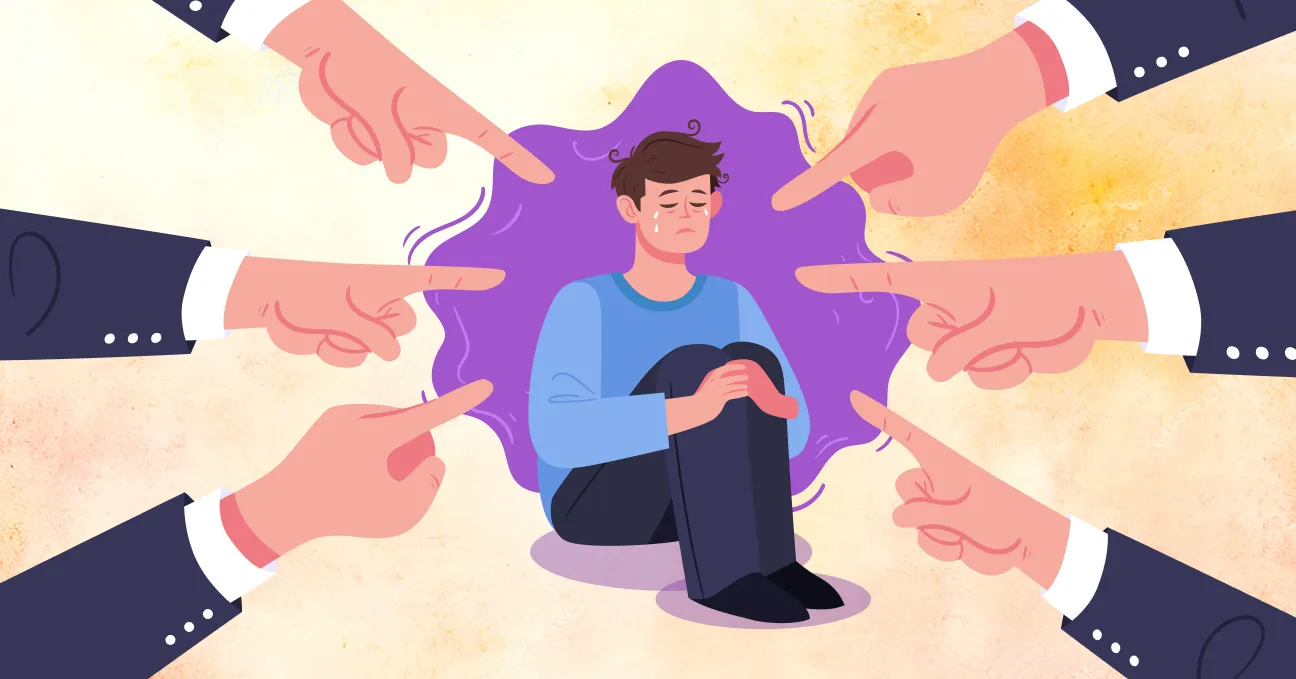
Criticism is worn by the heart, carried by the body and remembered in the mind
In writing blogs, lessons for HappyMe and creating my book, I have come up against not only outside criticism from people around me, but also those old wounds resurfacing from my internal criticised child.
I remember my cookery teacher at secondary school, she didn't like me very much, it may have had something to do with my Bananarama hairstyle. She said to me on the last day of term "You will never amount to much; you are far too flighty. I would set my sights low if I were you."
That stuck with me throughout my life and I always wondered why, was it because underneath I agreed with her, was it because I got criticised growing up or was it just because it would have been easier to settle than actually trying to prove her wrong.
How many times does that happen to us in life when we are criticised by others. I believe that predominantly from an early age we are our own worst self-critic but surely, I have had to learn that from someone, it's not inbuilt.
Where does our self-criticism really begin?
I believe that it starts slowly. Your brain is a computer that is programmed by all around you. Your parents, teachers, family members, friends, bullies etc. So how does that program work. The brain holds onto events in our lives that we attach lots of feelings to. So, my younger self in front of my whole class (with my supposedly cool hairstyle) being given that statement, would stick forever. Embarrassed, hurt, angry, let down, disappointed – yes, that's why I can still hear her voice now.
When writing HappyMe I knew that it would be so important to write many tasks, lessons, affirmations and visualisations to help people to begin to understand and love themselves. To find out where it all began and to change those patterns. So, if any of this is resonating with you, download HappyMe and begin today.
As we grow up, every time we hear something that we don't want to hear and attach a feeling to it, the brain then stores it and adds much more weight to it too. Then it looks outside of you for more evidence to prove you right, it's a safety program. It doesn't know if "I am amazing" is better for you than "I am an idiot," it only assesses how much feeling is attached to the thoughts.
Why do we believe the bad things more than the good?
I am not good enough, I am clumsy, I am shy, I am confused – they all have something in common – I am disappointed with you! The more important that person's opinion is of you, the more their criticism sticks in the brain. I have had clients in tears when they recall their football coach (who they looked up to) criticising them and telling them they are not good enough, years later.
Why is it so much easier to believe the bad things that people say about us instead of good things? "I can't take a compliment, I hate it, makes me feel awkward and embarrassed, I hear this a lot." I challenge my clients to ask 3 people that they love, to give them a list of 5 qualities about them, they are very reluctant. But once I convince them and they complete the task, they feel so much better about themselves and are surprised by many of the answers.
We constantly criticise ourselves but won't be that nasty to our friends or our loved ones. We treat them with more love and respect than we treat ourselves and as we do this, our heart breaks a little bit more each time. The most important thing that a human can do is to love and accept themselves.
Criticism can start quite innocently, the Dad that wants his children to grow up and be the best, or the mum who wants them to always look their best, the teacher who wants to get the most out of their students and the football coach who has to put his best team forwards or the friends at school who are just having a laugh.
How criticism becomes part of who we are
The problem for us humans, is that, once a person whom I love and look up to criticises me in that way when I am young or old, I may begin to do it to myself. It must be true, mustn't it? These criticisms then become a habit and a belief and all of a sudden, it's so engrained it becomes just who I am, part of my identity. This then becomes all encompassing and I then learn to believe that everyone thinks like that or everyone says that about me. Not just the few people that I original thought.
The brain looks for evidence from outside of us in people and situations to match our internal chatter and belief systems. A stern look here, a roll of the eyes there, a giggle behind a hand, an angry retort – they must all be about me; they know that I am not good enough. They really aren't about us most of the time, but that is what we believe it to be.
It can be a habit, a learnt behaviour from those around us, well that's how my parents brought me up and look at me I am alright. It won't do them any harm. Well, it does do harm and I am glad when I look around and see a change in our parenting skills today.
So how do I begin to change these patterns?
So, how do I begin to recognise these ways in me? The best way to change your mind and belief systems is to begin to watch and change your own thoughts. This may feel really exhausting at first and your mind might continually back away from the change you wish to make. The trick is consistency.
Things to look out for in yourself with other people. Start to think about what you say before you say it, the magic "Pause and breathe then talk". Especially with the people closest to you.
How you speak is made up of tone of voice, body language and your words. It is believed that your tone of voice carries the most weight of any conversation, around 55%. Body language comes a close second around 38% and the words we use only hold 7% of importance in any form of communication.
There are a number of side effects that come from living with criticism. We can turn into perfectionists or have a tendency to over explain ourselves. We may begin to people please as the pain of experiencing someone's disappointment in us can be too great. We also tend to hide our work or our brilliance because hearing or seeing negative comments would be too much to bear. Keeping things to ourselves instead of putting them out into the world for people to experience.
What can we actually learn from criticism?
So, what can we learn from the criticism of others? To begin with, not all criticism is true and in Happyme we have a task called My Stuff or Their Stuff which helps you to question this. Some feedback helps us grow, while some criticism simply comes from someone else's pain, frustration or expectations that they have projected onto us.
The real skill is learning the difference and not reacting to all comments which helps you improve without damaging your self-esteem. Harmful criticism makes you feel small, ashamed or never enough. Healing often begins when we stop turning every opinion into identity and let it wash over us. Trusting in our own opinions and ways of performing tasks.
Believe in yourself and remember, your brains job is to think. Your job is to assess if those thoughts are useful. Most criticism is not of any use at all. Let it wash over you, not through you.
Frequently Asked Questions
Why is it easier to believe criticism than a compliment?
Because our brains hold on to whatever we attach the most feeling to, and criticism usually arrives with a hefty dose of hurt or embarrassment behind it. A compliment rarely lands with the same weight, so it slides off while the unkind comment sticks. I see this all the time with clients who can recite something cruel said to them twenty years ago but can't recall a single kind word from last week.
Are we born our own worst critic, or do we learn it?
I don't believe self-criticism is inbuilt; we learn it. From an early age the people we look up to, our parents, teachers, coaches and friends, hand us comments that we take on board, and over time we start saying them to ourselves. The good news is that anything learned can be unlearned.
How does childhood criticism affect us as adults?
Criticism we heard as children can quietly become a belief, and then a part of our identity, until we genuinely think everyone sees us that way. It often shows up later as perfectionism, people-pleasing, over-explaining ourselves, or hiding our work because we're frightened of someone's disappointment. Recognising where it began is usually the first step to loosening its grip.
How do I stop being my own worst critic?
Start by watching your own thoughts and asking a simple question: is this thought actually useful? Your brain's job is to think; your job is to decide which thoughts are worth keeping. It feels exhausting at first, but with consistency you can learn to let unhelpful criticism wash over you rather than through you.
How do I tell helpful criticism from harmful criticism?
Helpful feedback gives you something to grow from; harmful criticism just makes you feel small, ashamed or never quite enough. Some comments say far more about the other person's pain or expectations than they do about you. In HappyMe there's a task called My Stuff or Their Stuff that helps you work out which is which, so you can take what's useful and leave the rest.