
Loneliness hurts because it usually isn't about how many people are around you. It's about how connected you feel to yourself when you're with them. That's why it can sit underneath everything even in a full room, and why more company often doesn't touch it. Understanding where the ache really comes from is the first step to softening it.
Have you ever felt lonely, not just alone, but deeply alone? The kind of loneliness that doesn't disappear when you're around other people. The kind that sits quietly underneath everything, even in a busy room, even in conversation, even when life looks "fine" from the outside.
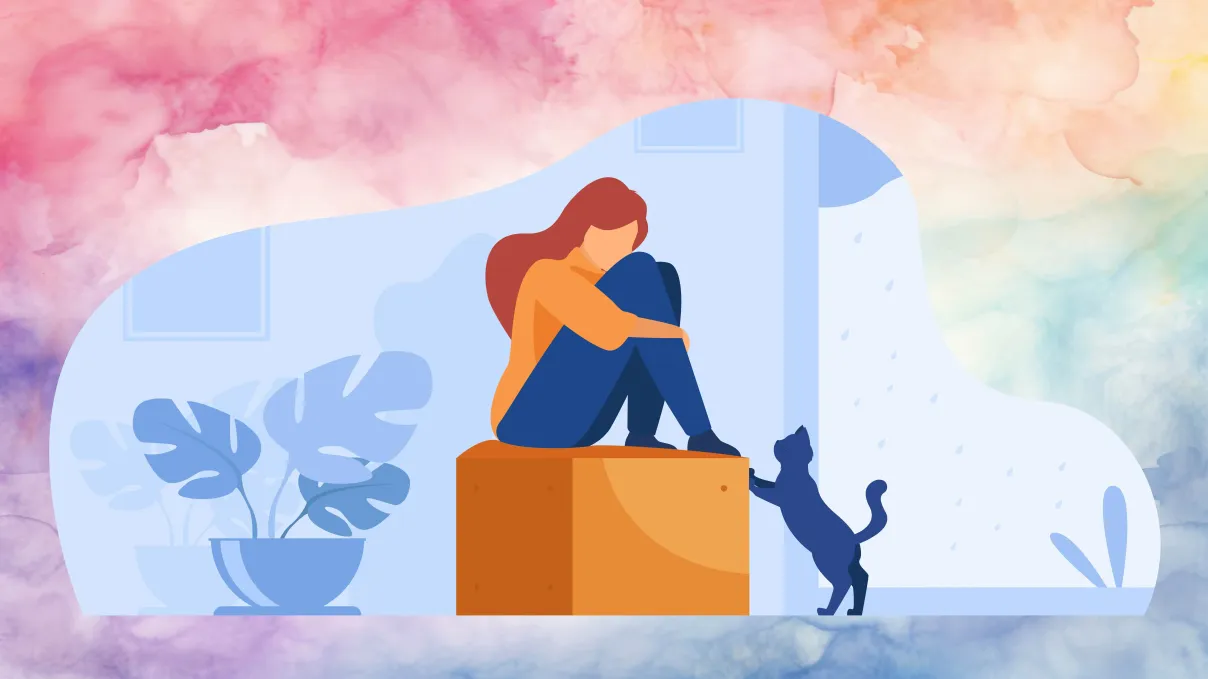
It's a strange feeling, because it doesn't always make sense. You can be surrounded by people, talking, laughing, doing all the right things, and still feel like you're somehow on the outside of it all. Present, but not fully part of it. Seen, but not truly known. Underneath that, there's often a dull ache, a quiet, persistent feeling that something is missing, even if you can't quite explain what it is.
It often begins earlier than we think
Most people assume loneliness is about not having enough people around them, but in many cases it isn't that simple. Loneliness often begins much earlier, in small moments that didn't feel safe, steady, or certain. A child being dropped off somewhere unfamiliar without mum. A moment of not being understood by those that matter, or just never feeling like you fit in. A feeling of being too much, or not quite enough.
These experiences don't always stay as memories we can recall clearly, but they are felt and stored in the body. At the time, the mind isn't analysing it, but the body is responding and asking, "Am I safe here? Do I belong? Will someone come back for me?" If those questions aren't met with a clear sense of safety, the system adapts. Quietly, subtly, and without us even noticing it happening.
How we slowly move away from ourselves
As we grow, many of us begin to adjust ourselves in order to feel accepted. We become easier, quieter, more likeable. We learn what gets approval and what doesn't, so we begin to shape ourselves around that. This might not seem huge at the time, but it becomes a part of our survival. Over time, something shifts. Not dramatically, but enough that we start to move slightly away from who we really are towards who we think we should be. That's where the feeling begins.
Because loneliness is not always the absence of people. It's often the absence of being fully ourselves within those relationships.
Why it shows up again later in life
That early feeling doesn't disappear, it simply gets carried forward. So later in life it shows up in ways that can feel very confusing. You might find yourself surrounded by people but still not feeling seen. Wanting connection, but holding something back. Talking, but not really saying what you feel.
And underneath it all, a quiet sense that something doesn't quite feel right. When that feeling is there, the mind tries to explain it by creating a meaning around it:
Maybe there's something wrong with me. Maybe I don't fit in. Maybe people don't really like me, and maybe I don't much like myself either.
These thoughts can feel very real, not because they are true, but because they match the feeling already sitting in the body. They keep repeating, and over time they begin to feel familiar, like part of who you are. It's then very natural to try and resolve that feeling from the outside. To seek more connection, more reassurance, more success, more belonging.
And sometimes that helps, for a while. But often the feeling returns tenfold. Not because you're doing something wrong, but because the part of you that feels lonely isn't looking for more external input. It's looking for something closer, something quieter, something internal.
Why I wrote HappyMe
That's why I wrote HappyMe: to be a companion that helps you go inside and explore the mountains of love and knowledge that are already there, available to you. To teach you how to self-regulate, to be more patient with yourself, and how to change your focus and accept who you truly are.
How the ache begins to soften
Loneliness begins to soften when we start to come back to ourselves, through self-recognition, therapy, or maybe a friend's comment. It's a gradual thing, as you begin to look inside. Not in a forced way, not in a "fixing" way, but in a noticing way, where you begin to pay attention to how you feel rather than pushing it away. When you allow yourself to be as you are, without adjusting or performing, and when you start to meet yourself in the way you may have been hoping someone else would.
Something shifts, and the feeling starts to change. Not because everything around you has changed, but because your relationship with yourself has. From that place, connection begins to feel different, and conversations feel easier. Being alone doesn't feel quite as heavy, and there's a sense of being more settled within yourself, rather than constantly looking outward to feel okay.
There is nothing wrong with you
If this feels familiar, it's important to know there is nothing wrong with you. This isn't a flaw in who you are. It's not because you're too much, or not enough. It's just something your system learned over time, in response to moments where it needed to protect you, and anything that has been learned can begin to shift.
You don't need to force yourself to be more social, more confident, or more "together." You don't need to fix yourself. You just need to begin by noticing.
If that feeling is showing up for you now, pause for a moment. Notice where it sits in your body and what it feels like, without trying to change it straight away. That moment of awareness is not small. It's the beginning of something important.
Because you're not as far away from connection as it feels. Sometimes, it simply begins by coming back to you.
With love,
Mell x